
It happens every single year. We’re just starting to see a bit of sun peeking through the clouds in Farnham, you’re thinking about maybe, just maybe, turning the thermostat down a notch, and then it happens. That dreaded silence. Or worse, a weird clunking sound coming from the cupboard under the stairs. Suddenly, there’s no hot water for your morning shower and the radiators are as cold as a February frost.
Why does it always seem to happen in March? You’d think the boiler would have given up in the depths of December when it was working its hardest. But no, it waits until the finish line is in sight to throw in the towel.
At Heat Eco Building Services, we see a massive spike in calls for boiler repair farnham right around this time. It’s not just bad luck, there’s actually a bit of a reason behind the madness. Your boiler has basically just finished a marathon. Since October, it’s been running flat out, pushing hot water through your pipes 24/7 to keep the house toasty. By the time March rolls around, the components are tired, the sludge has settled, and that tiny little leak that wasn't a problem in November has finally become a disaster.
The "Marathon" Effect on Your Heating System
Think of your boiler like a car. If you drove a car from London to Edinburgh and back every single day for five months without checking the oil or the tyres, you wouldn't be surprised if it broke down on the final leg, would you? That is exactly what’s happening in there house right now.
The heavy heating season puts maximum stress on every moving part. The pump has been spinning for thousands of hours. The heat exchanger has been dealing with constant temperature fluctuations. If there’s any debris or "sludge" in your system, it’s been circulating and grinding away at the internal seals.
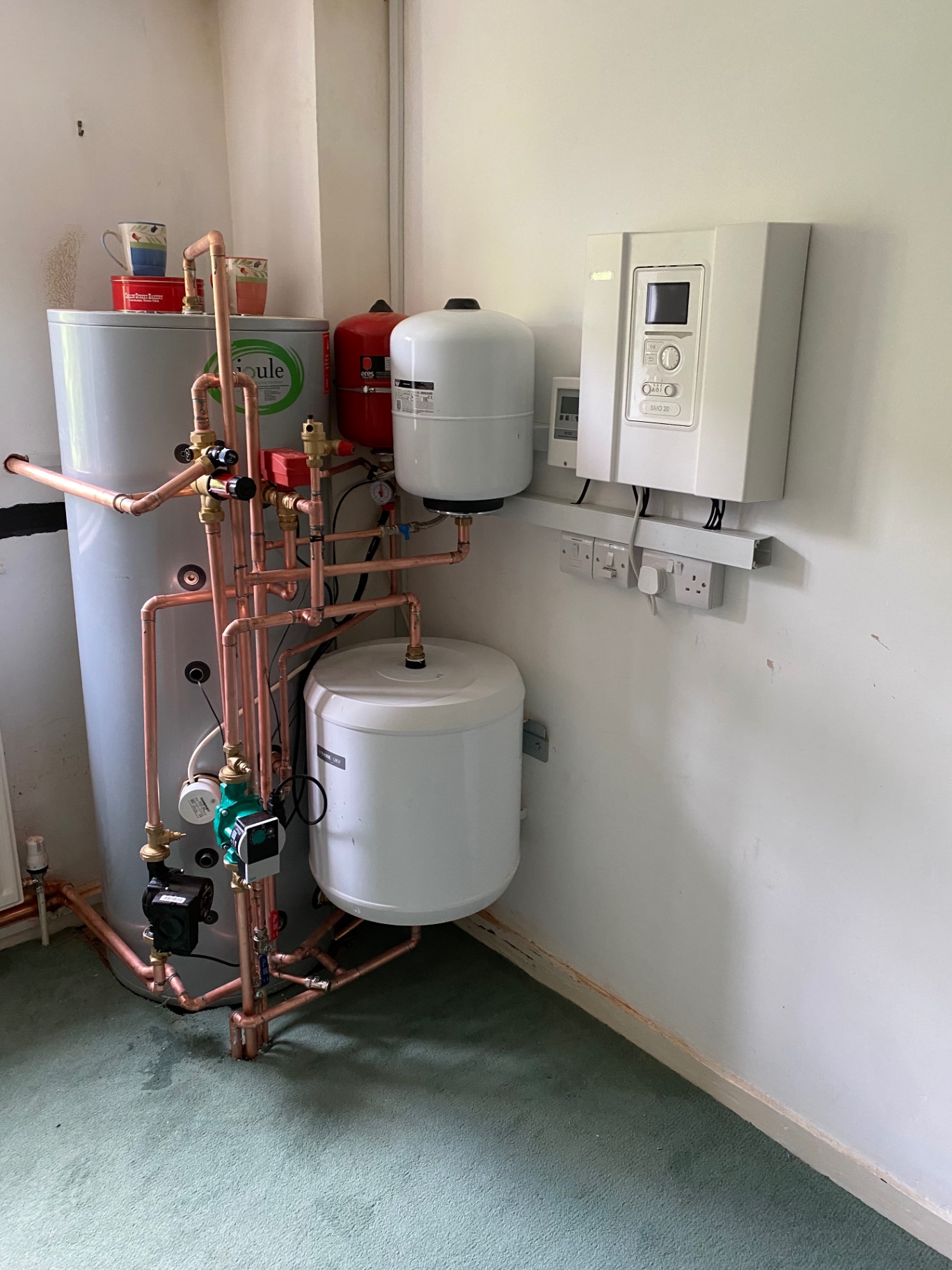
Most people don't realise that even a tiny layer of scale buildup: we're talking 0.03 inches here: can drop your boiler's efficiency by 10%. In a place like Farnham where the water can be a bit on the hard side, that scale is a silent killer. It acts like a thermal blanket on the heat exchanger, making the boiler work twice as hard to get the same amount of heat into your water. Eventually, the metal gets too hot, it stresses out, and bang: you’re calling us for an emergency fix.
What’s Actually Breaking in There?
When we send a gas safe engineer farnham out to a March breakdown, we usually find one of three things:
- The Pump has Seized: It’s been working so hard for so long that the bearings have finally had enough. Or, a bit of grit has got stuck in the impeller.
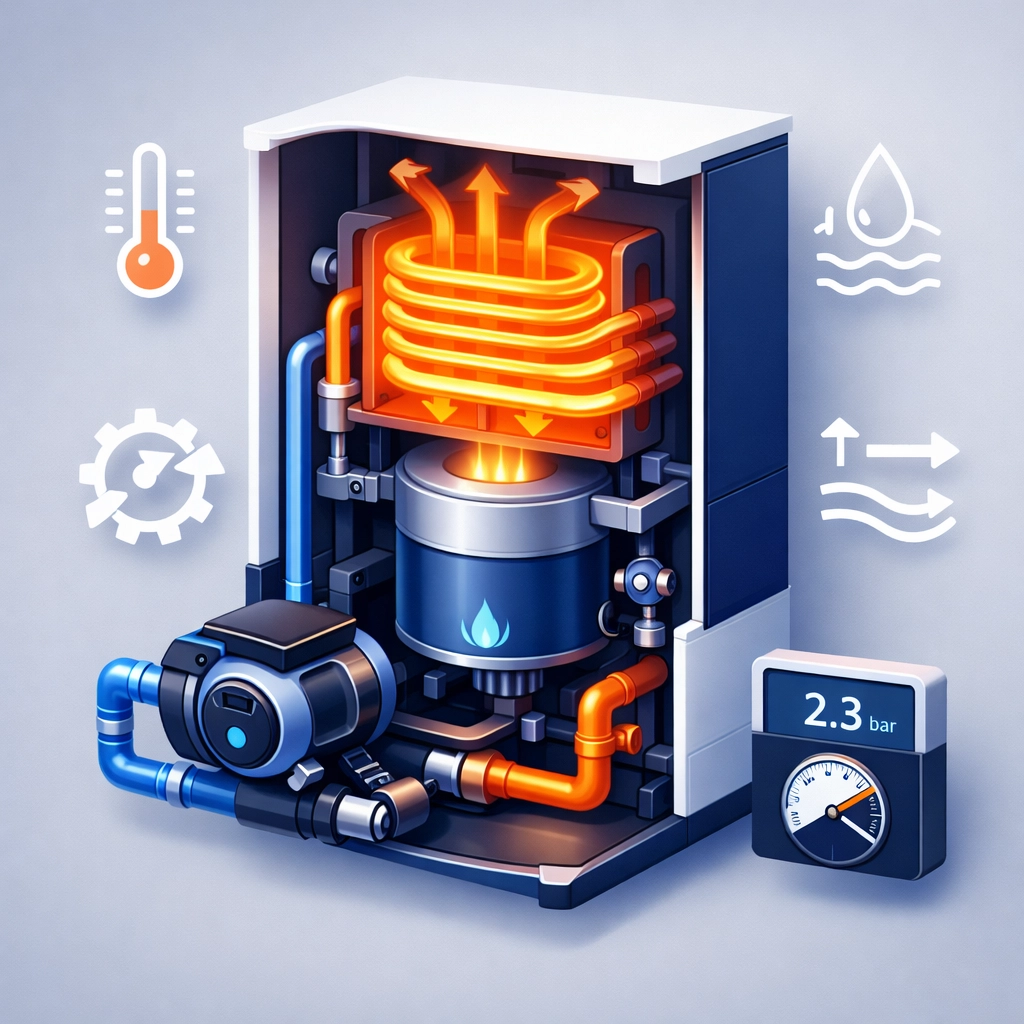
- Loss of Pressure: This is a classic. A tiny leak in a radiator valve or a failing expansion vessel finally drops the pressure low enough that the boiler's safety sensors say "Nope" and shut the whole thing down.
- The Sensor Shuffle: Modern boilers are smart, maybe too smart. They have sensors for everything. If one of them gets a bit of corrosion on it from the damp winter air or a tiny bit of soot, it'll send a fault code and lock you out.
How to Stop the March Meltdown (Before It Happens)
We don't want you sitting there in a dressing gown waiting for us to arrive. We’d much rather help you keep the thing running. There are a few bits you can do yourself, and a few bits where you definitely need a pro.
Keep an Eye on the Gauge
Check your boiler pressure. It should usually be between 1.0 and 1.5 bar when the system is cold. If it’s creeping down toward the red zone, you’ve got a leak somewhere. It might be so small you can’t see it, or it might be a valve that needs a quick nip with a spanner. If you keep having to top it up, give us a shout because that fresh water you're adding is bringing new oxygen into the system, which causes more rust.
Listen to the Noises
Is your boiler whistling like a kettle? That’s called "kettling" (fancy name, right?). It usually means there’s a buildup of limescale or sludge on the heat exchanger. It’s a warning cry. If you hear it, don’t ignore it. A chemical flush now is much cheaper than a new heat exchanger in two weeks.
Bleed the Radiators
If the top of your radiator is cold but the bottom is hot, you’ve got trapped air. This makes your pump work harder than it needs to. Grab a radiator key and a rag and get that air out. It’s a five-minute job that saves your pump's life.
Clear the Cupboard
We see this all the time in Farnham homes. The boiler is tucked away in a utility room or a kitchen cupboard, and over the winter, it’s been buried under coats, vacuum cleaners, and spare rolls of wallpaper. Your boiler needs to breathe. If the airflow is blocked, it can overheat or, worse, start producing carbon monoxide because it can’t burn the gas properly.

When to Call in the Big Guns
While we love a bit of DIY encouragement, gas is not something to mess with. If you need a boiler repair farnham, you need someone who knows exactly what they are looking at.
Our team at Heat Eco Building Services are all Gas Safe registered. We don't just "fix" the problem; we look at why it happened. If your safety valve has gone, we’ll check the expansion vessel too, because usually, one causes the other to fail. Safety valves should actually be replaced every 3-4 years anyway, as the internal springs can get weak without you ever seeing a drop of water.
If you’re thinking about an upgrade because your old boiler is costing you a fortune in repairs, we can talk you through boiler installation farnham. Modern A-rated boilers are incredible. They use so much less gas that they often pay for themselves in a few years, especially with the way energy prices have been lately.
Thinking Beyond the Boiler
Since we are talking about keeping things running smoothly, March is also the perfect time to look at your overall home efficiency. We’ve been doing a lot of underfloor heating installs lately. It’s a much more "gentle" way to heat a home than scorching hot radiators, and it puts less peak-demand stress on your boiler.
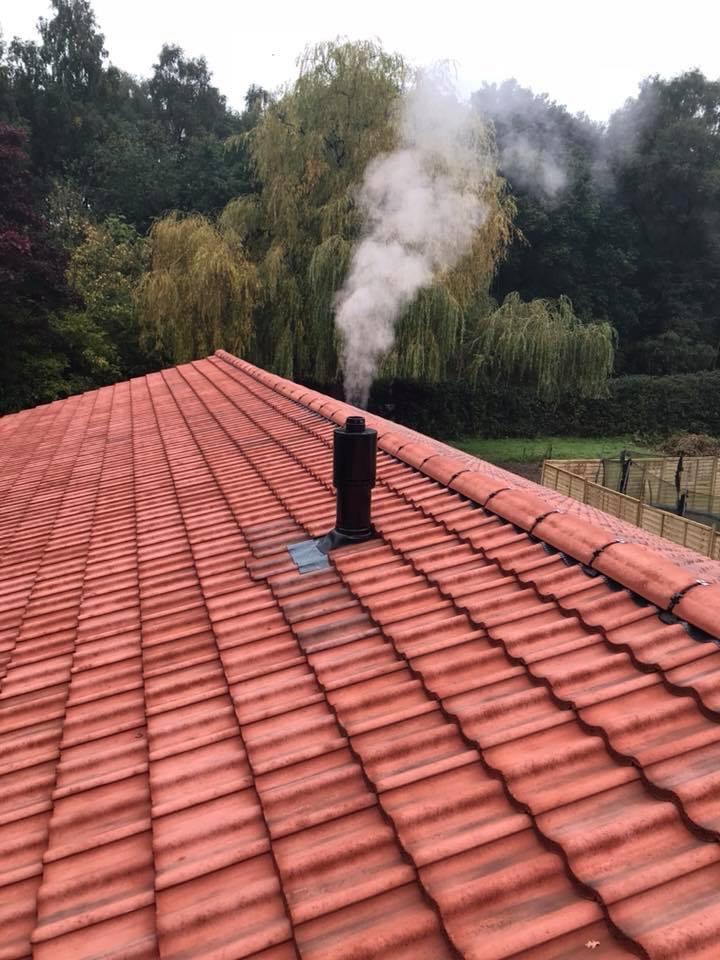
Also, have you looked at your flue lately? The bit of pipe that sticks out of your roof or wall. If it’s loose or the seal has perished, you could be getting water dripping back into the boiler, which fries the electronics.
What’s Next? (The Saturday Tease)
We’ve spent all this time talking about staying warm, but have you seen the forecast for the weekend? They are saying it’s going to be a bit of a scorcher for this time of year!
Once you’ve made sure your boiler isn't going to quit on you, it’s time to stop looking at the radiators and start looking out the window. On Saturday, I’m going to be posting about how to get your garden summer-ready. We’re talking landscaping and even swimming pool installation for those of you who want to make a real splash this year.

Don't let a broken boiler ruin your spring. A little bit of maintenance now goes a long way. If you’re worried about yours, or if it’s already started making those "I'm about to quit" noises, get in touch with us at our contact page. We’re local, we’re friendly, and we know exactly how to handle these March meltdowns.
Stay warm (but not too warm, hopefully!) and we’ll see you on the blog on Friday for some pool inspiration!