
![[HERO] Boiler Installation Farnham: 7 Mistakes You're Making with Your Heating System (and How to Fix Them)](https://cdn.marblism.com/544chqQywSSp.webp)
We see it all the time here in Farnham. Someone's had a boiler fitted by the cheapest quote they could find, and six months later they're calling us because their heating bills have gone through the roof, there's weird noises coming from the cupboard, or worse – they've got a carbon monoxide detector screaming at them at 3am.
A boiler installation isn't just about sticking a box on the wall and connecting a few pipes. Get it wrong and you're looking at wasted energy, sky-high bills, safety risks, and a system that'll pack in way before it should. We've been fitting boilers across Farnham, Farnborough, and Guildford for years, and honestly, the mistakes we see are pretty much the same every time.
So let's talk about the seven biggest blunders people make with their heating systems – and more importantly, how to avoid them.
1. Getting the Size Completely Wrong
This is the big one. You wouldn't buy size 8 shoes when you're a size 10, right? Same principle applies to boilers, except the consequences are a lot more expensive.
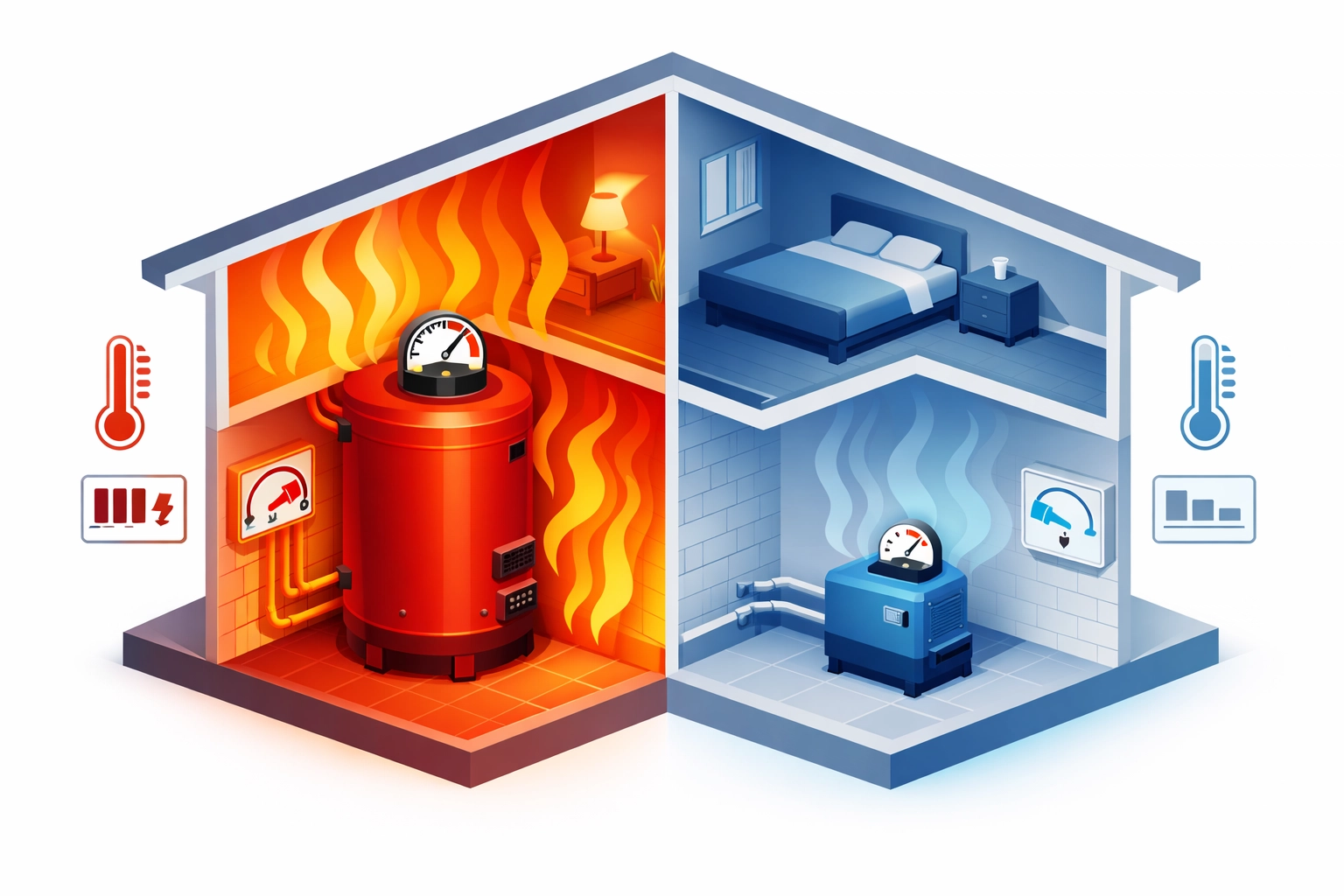
An oversized boiler sounds great in theory – surely more power means more heat? – but what actually happens is short-cycling. The boiler fires up, heats your home too quickly, then shuts down. Then fires up again. And again. It's like constantly stopping and starting your car in traffic, your fuel consumption goes mental and the engine wears out faster.
On the flip side, an undersized boiler is working flat out 24/7 trying to heat a space it was never designed for. You'll never quite get warm enough, and the poor thing will be knackered within a few years.
The fix: Get a proper heat loss calculation done. We always measure up your property, count radiators, check insulation, factor in how many bathrooms you've got, and work out exactly what capacity you need. It's not guesswork, there's actual maths involved. For most Farnham homes, we're usually looking at anything from 24kW to 35kW for a combi boiler, but every house is different.
2. Dodgy Ventilation and Placement
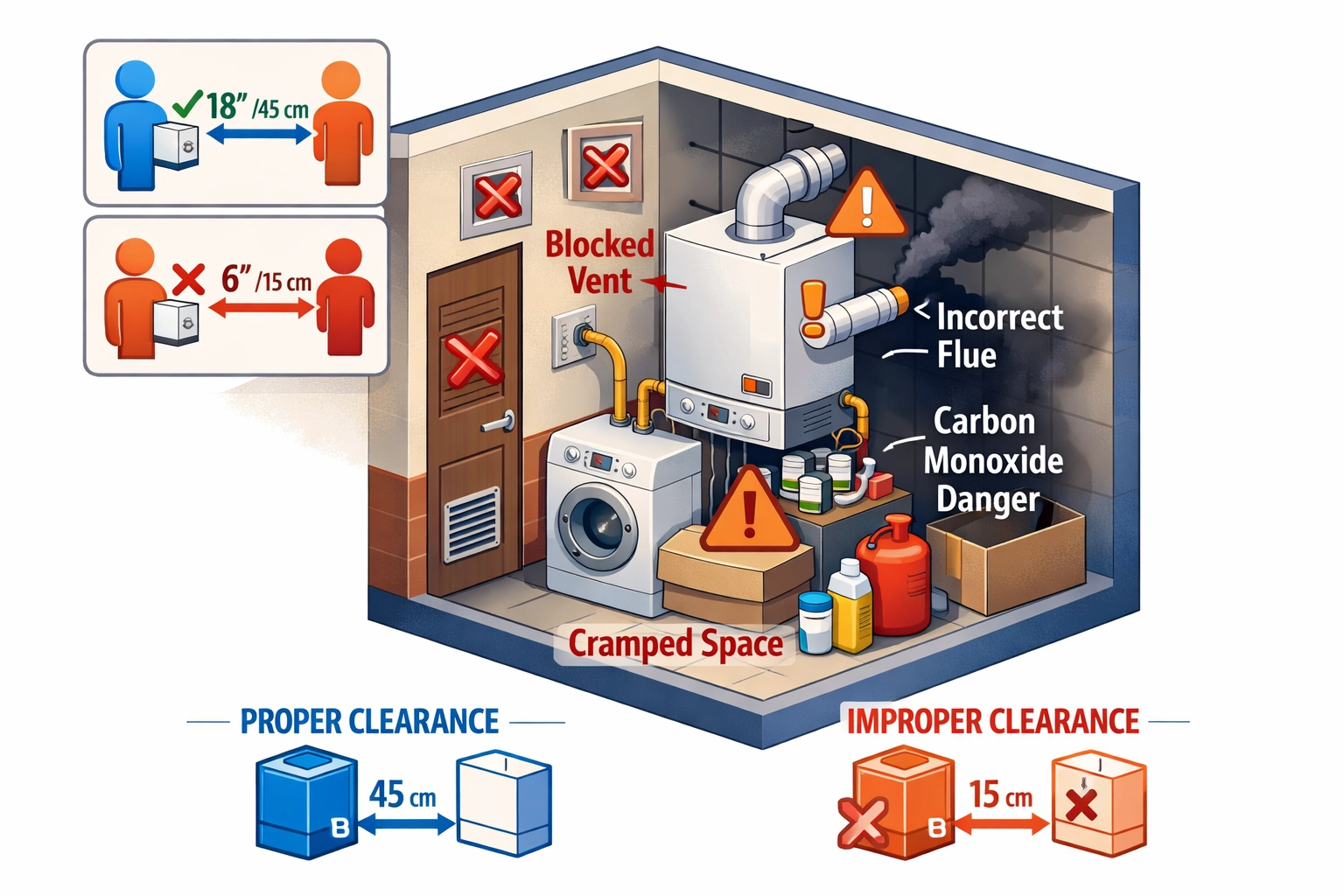
Carbon monoxide doesn't mess about. It's odourless, colourless, and can be fatal. Poor ventilation during boiler installation is one of the most dangerous mistakes we see, and it's completely avoidable.
Then there's placement. We've seen boilers crammed into tiny cupboards with no airflow, installed right next to kitchen extractor fans (bad idea), or positioned where the flue exits straight into a neighbour's window. All of these create problems – either for efficiency, safety, or both.
The fix: Your boiler needs proper ventilation as per manufacturer specs AND building regulations. The flue needs to be positioned so exhaust gases don't accumulate anywhere they shouldn't. We always check clearance distances, make sure there's adequate air supply, and position flues away from windows, doors, and air bricks. It's non-negotiable stuff.
If you're getting a boiler installation done, make sure whoever's doing it is Gas Safe registered and knows the regs inside out. We've had to redo installations from other companies because the ventilation just wasn't up to scratch.
3. Incorrect Piping (The Hidden Troublemaker)
This one's sneaky because you can't see it going wrong until you start noticing symptoms – cold spots on radiators, weird gurgling noises, or some rooms heating up while others stay freezing.
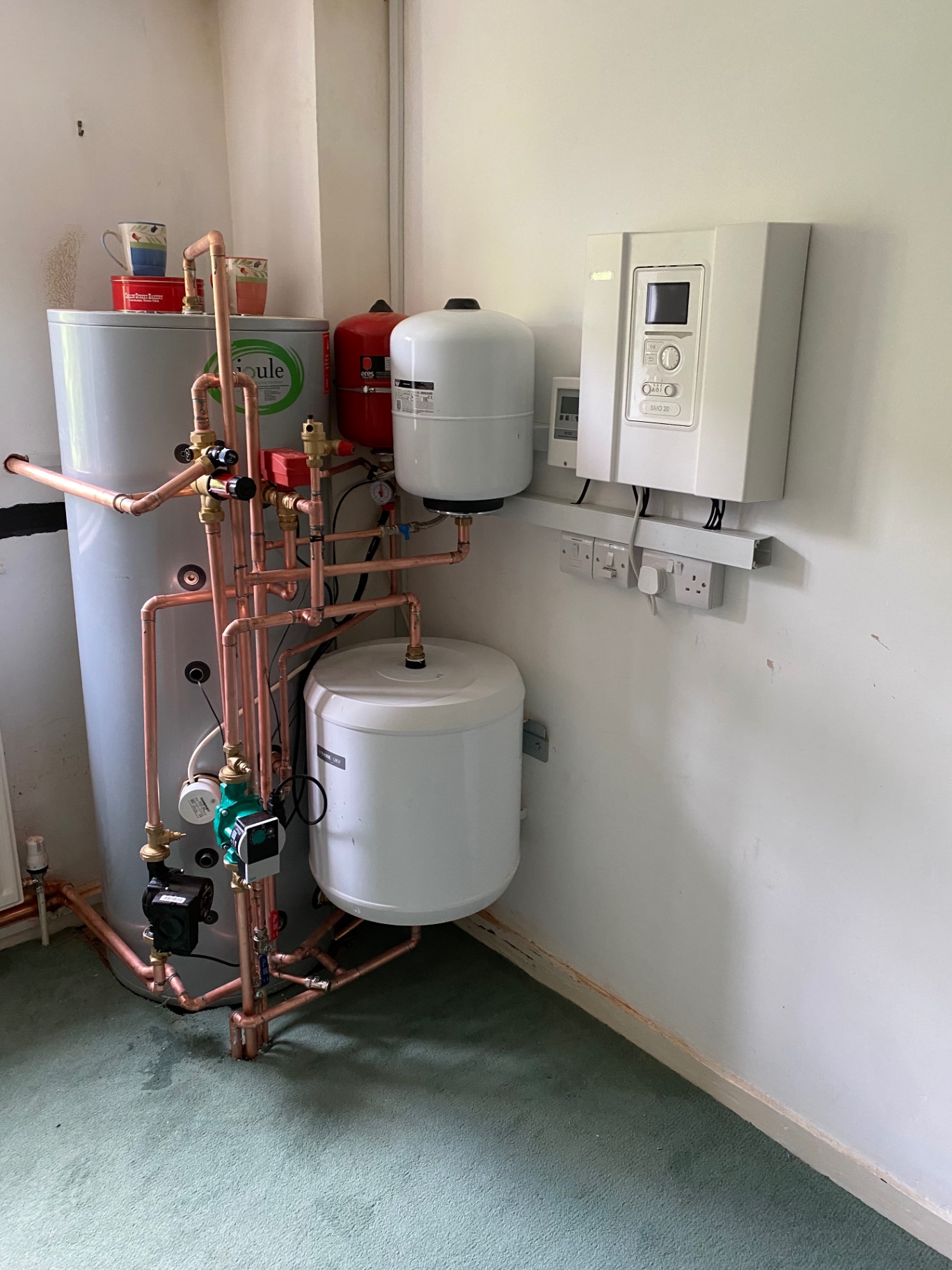
Wrong pipe sizing means your system can't circulate water properly. If you've got a boiler with 2-inch connections but someone's used 15mm piping throughout, the flow rate is strangled. Your boiler's working harder than it needs to, and your radiators aren't getting the heat they should.
Poor insulation on pipes is another issue, especially for pipes running through unheated spaces like lofts or garages. You're literally losing heat into thin air before it even reaches your radiators.
The fix: Follow the manufacturer's piping requirements to the letter. Sometimes that means using larger diameter pipes than the boiler connections suggest. Insulate any pipework in cold spaces, and make sure pipe runs are logical and efficient – no unnecessary loops or detours.
4. Skipping Water Treatment
Farnham's got fairly hard water, which means your heating system is battling limescale and debris from day one. Without proper water treatment, that gunk builds up inside your boiler, your heat exchanger, and your pipes.
What happens? Reduced efficiency, increased energy bills, and eventually, component failure. We've seen boilers that should last 15 years packed in after 5 because nobody bothered with water treatment.
The fix: Install a magnetic filter (we usually fit Fernox or similar) to catch debris before it circulates through your system. Add inhibitor to the water to prevent corrosion and limescale buildup. Then actually maintain it – the filter needs cleaning, usually once a year during your service.
It's a small upfront cost that saves you thousands down the line. Every boiler we install comes with proper water treatment as standard because we're not having our work failing prematurely due to preventable issues.
5. Ignoring Safety Devices
Pressure relief valves, temperature limiters, flame failure devices – these aren't optional extras, they're there to stop your boiler turning into a very expensive and dangerous problem.
But we see installations where safety valves aren't properly connected, or worse, where someone's bypassed them entirely because "it was making a noise." That noise was there for a reason, mate.
The fix: Every safety device gets installed exactly as specified, tested thoroughly, and checked regularly during annual services. Your pressure relief valve needs a discharge pipe that terminates safely outside. Your flame failure device needs to work every single time. There's no cutting corners on safety, ever.
6. Not Checking Existing Infrastructure
You can't just whack a new boiler on without looking at what's already there. Old pipes might be corroded, radiators could be sludged up, and if your system pressure's been dodgy for years, there might be leaks you don't even know about yet.
Installing a shiny new boiler onto a knackered old system is like putting a Ferrari engine in a rust bucket – you're not going to get the performance you paid for.
The fix: Before we install any boiler, we inspect the existing system. Are the pipes sound? Do the radiators need replacing? Is the system pressure stable? Sometimes a powerflush is needed to clear out years of accumulated muck before the new boiler goes in.
Yes, it might add a bit to the upfront cost, but you're protecting your investment. A new boiler on a clean, properly maintained system will run beautifully and last its full lifespan.
7. Choosing the Wrong Type of Boiler
This comes back to understanding your actual needs, not just what's cheapest or what your mate down the pub reckons you should get.
Combi boilers are brilliant for smaller properties with one bathroom – hot water on demand, no tank needed, compact and efficient. But stick one in a 5-bedroom house with three bathrooms and you'll be fighting over who gets to shower first because the pressure and flow rate can't cope.
System boilers with a cylinder suit larger properties with higher hot water demands. Conventional boilers are increasingly rare but still have their place in certain setups, especially where you're keeping existing systems.
The fix: Have an honest conversation with your installer about how you actually use your home. How many people live there? How many bathrooms? Do you all shower at once in the morning? Do you run baths? Is space tight or have you got room for a cylinder?
We do this assessment with every customer before recommending a boiler type. There's no point us selling you something that won't work for your lifestyle just to get the job done quickly.
Get It Right First Time
Look, boiler installation isn't something you want to do twice. Done properly by someone who knows what they're doing, you're looking at 10-15 years of reliable heating and hot water. Done badly, you're looking at problems almost immediately and potentially dangerous situations.
We've been working across Farnham and the surrounding areas for years, and we've seen every mistake in the book – often when we're called in to fix someone else's botched job. It's always more expensive to fix than it would have been to do it right first time.
If you're thinking about a new boiler installation, getting strange noises from your current system, or your energy bills seem higher than they should be, give us a shout. We'll come and have a proper look, give you honest advice about what you actually need (not what'll make us the most money), and if you decide to go ahead, we'll do the job properly.
No shortcuts, no bodges, just quality work that'll keep you warm for years to come. That's what we do.
Need a Gas Safe engineer in Farnham? Get in touch and let's talk about your heating system before winter proper kicks in.