
Water solar panels are one of those things that sound complicated but are actually dead simple once you get your head around them. And the best bit? They can slash your water heating bills while doing something good for the planet.
We've been fitting these systems across Farnham, Guildford, and Farnborough for years now, and honestly, more homeowners should know about them. So let's break it down properly, no jargon, no waffle.
What Exactly Are Water Solar Panels?
Right, so water solar panels (also called solar thermal panels) are completely different from those solar panels you see generating electricity. These ones skip the whole electricity thing entirely and go straight for heat. They absorb sunlight and use it to heat your home's hot water supply directly.
Think of them as big, efficient sun catchers on your roof that warm up your water without touching your gas or electric bill. Pretty smart, really.
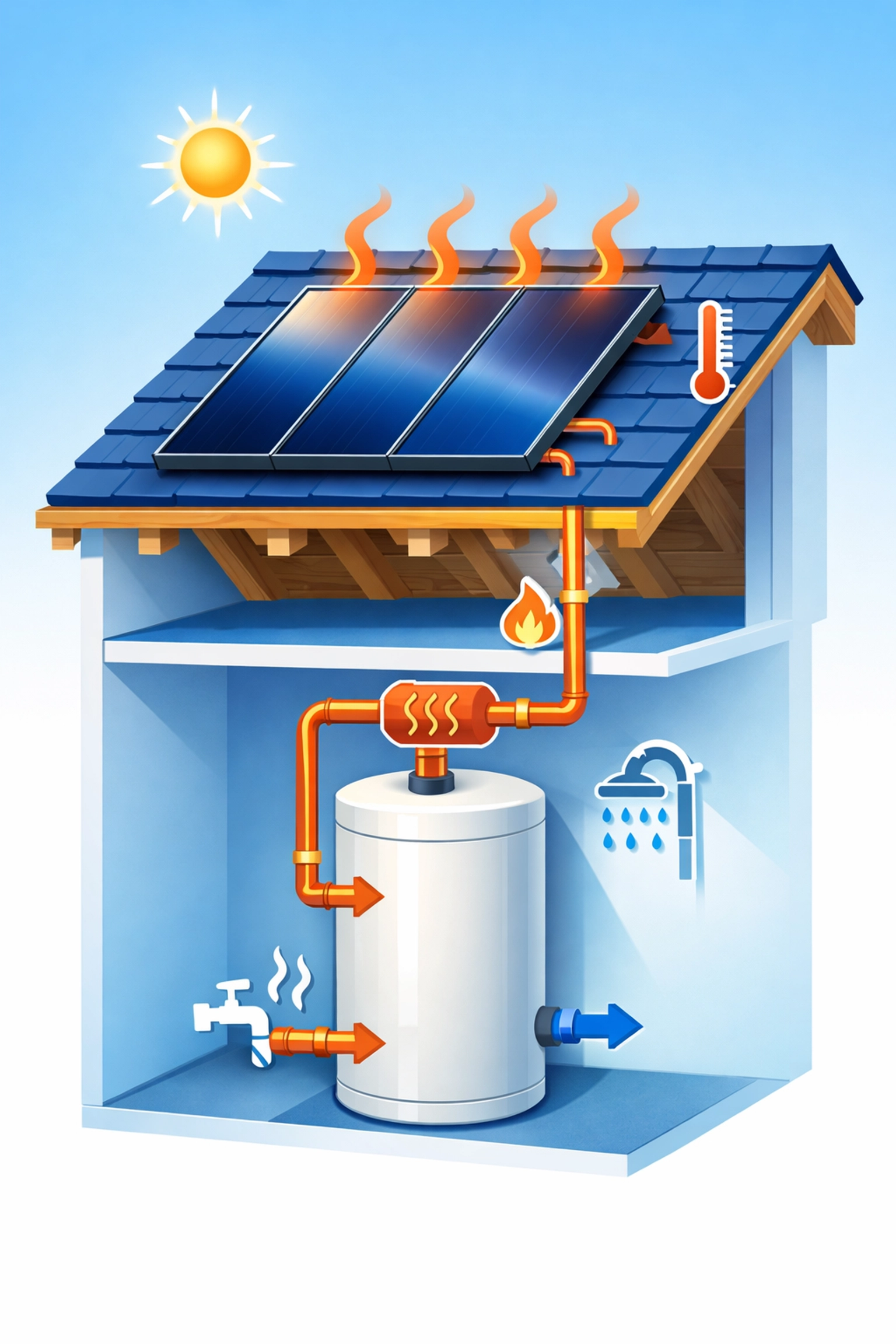
The system sits on your roof collecting solar energy all day, then transfers that heat into your hot water tank. Come shower time, you're using water heated by the sun, sometimes entirely free, depending on how sunny it's been.
How Do They Actually Work?
The mechanics are surprisingly straightforward. Here's what happens:
The collectors sit on your roof, usually looking like dark flat panels or tubes, and they're designed to absorb as much solar energy as possible. Inside these collectors, there's a heat transfer fluid flowing through pipes. This fluid is typically a mix of water and antifreeze (so it won't freeze up on those cold winter mornings).
When sunlight hits the collectors, the fluid heats up. A pump then pushes this hot fluid down into your house, where it flows through a heat exchanger coil inside your hot water cylinder. The coil transfers the heat from the fluid into the water stored in your tank, warming it up nicely.
Once the fluid has given up its heat, it cools down and gets pumped back up to the roof collectors to heat up again. It's a continuous cycle that runs automatically whenever the sun's out.
The clever bit is the controller. This little device measures the temperature difference between your roof collectors and your water tank. When the collectors are about 8-10°C warmer than your tank, it switches the pump on. When that difference drops to just 3-5°C, it switches off again. No wasted energy, no overworking the system, it just does its thing efficiently.
Active vs Passive Systems
There are two main types, and the difference is pretty simple.
Active systems use electric pumps to circulate the heat transfer fluid. These work in pretty much any climate and are what we fit most often in Surrey. They're controlled by that smart temperature controller we mentioned, so they know exactly when to pump and when to rest.
Passive systems don't have pumps at all. They rely on natural convection and gravity to move the fluid around. Hot fluid rises, cold fluid sinks, basic physics doing all the work. These are simpler with fewer moving parts, which means less that can go wrong. The downside? They need to be positioned just right for gravity to do its job, which isn't always practical on every roof.
Some newer systems even use solar-powered pumps, so the whole thing runs entirely on renewable energy. On cloudy days, these systems just slow down naturally, no electricity drain.
Why They're Brilliant for Your Home
We always tell clients: water solar panels are one of the most efficient renewable energy investments you can make. Here's why.
Massive energy savings. Heating water accounts for a huge chunk of your home's energy use, often 15-20% of your total energy bills. A decent solar water heating system can meet 50-70% of your annual hot water needs, sometimes more in summer. That's money staying in your pocket instead of going to the energy companies.
Direct heat conversion. Unlike solar PV panels that convert sunlight to electricity (which then heats water), these panels convert sunlight straight to heat. No conversion losses, no middleman, just pure efficiency at what they do.
Low maintenance. Once they're installed properly, these systems basically look after themselves. An annual service to check the fluid levels and pump operation, and you're sorted. We've got systems we fitted 10+ years ago still running perfectly.
Environmental impact. Every kilowatt-hour of hot water you get from the sun is a kilowatt-hour you're not burning gas or using grid electricity for. Your carbon footprint drops significantly, and you're doing your bit without any lifestyle changes whatsoever.
Property value. Eco-efficient homes are increasingly attractive to buyers. A properly installed solar water heating system shows you've invested in the property and future energy costs, which is a genuine selling point.
Perfect for Surrey Homes
We've fitted these across Farnham, Guildford, and Farnborough, and they work brilliantly in our climate. Yes, even with our famously unpredictable British weather.
You don't need blazing sunshine for these to work, they collect heat even on overcast days. Obviously they perform best in summer, but you'll still get useful heat gains in spring and autumn too. In winter, they provide pre-heating, which means your boiler has less work to do.
Most homes in Surrey have south-facing roof space that's perfect for solar collectors. If your roof faces southeast or southwest, that works too, you just position them to catch maximum sun exposure.
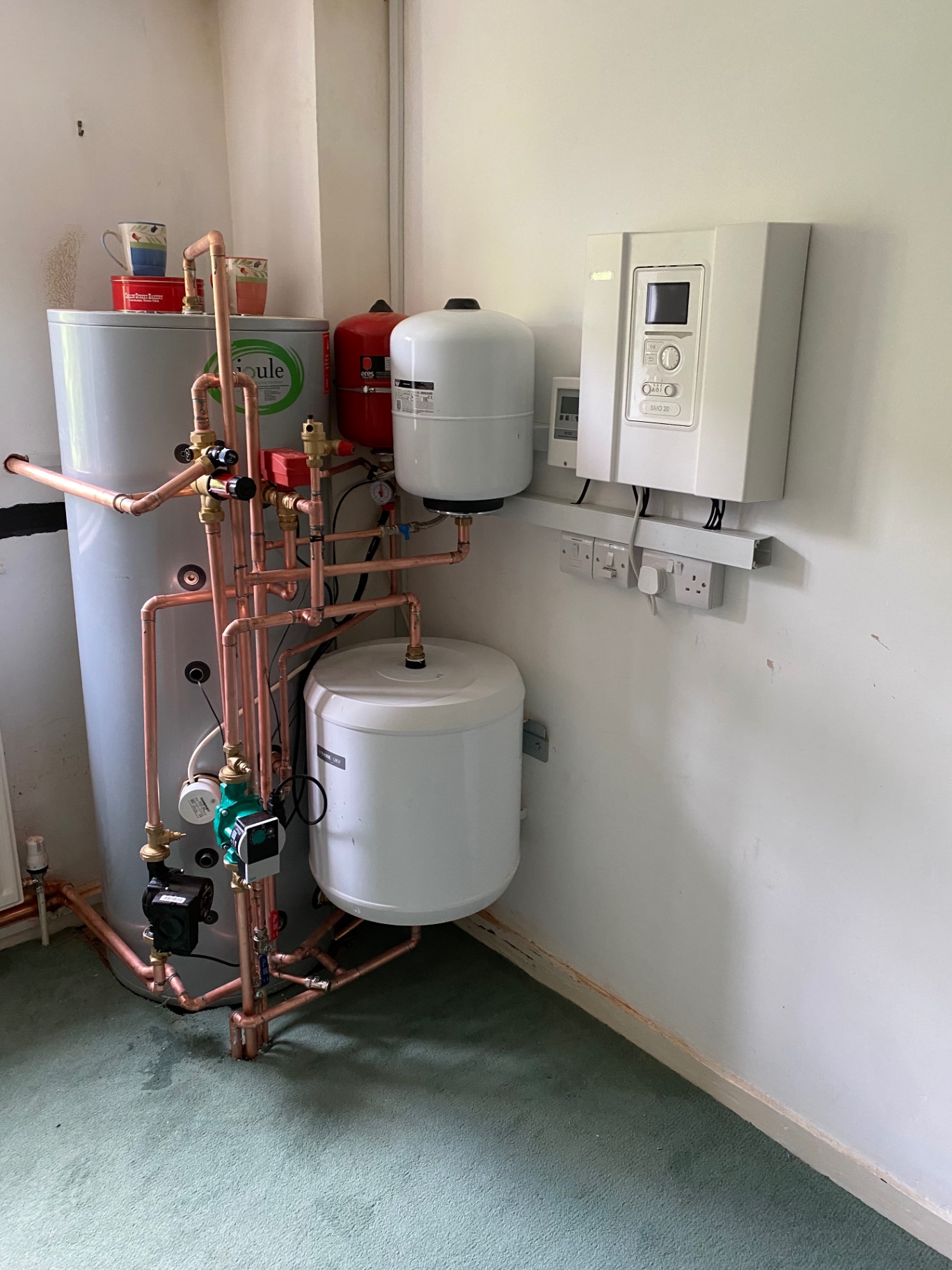
The systems integrate beautifully with existing boiler setups. Your boiler installation continues to work as a backup, kicking in only when the solar system hasn't heated the water enough. It's a partnership, really.
What to Know Before Installing
Roof space. You'll typically need 3-6 square meters of unshaded roof for an average family home. We'll assess this during our site visit.
Hot water cylinder. You'll need a compatible cylinder with either a solar coil already fitted or space to add one. If you're getting a new cylinder anyway, we can spec one that's solar-ready from the start. This often comes up during bathroom renovations when we're upgrading the whole system.
Planning permission. In most cases, you won't need planning permission, solar panels are considered permitted development. But if you're in a conservation area or have a listed building, there might be restrictions. We'll sort that out for you during the planning stage.
Payback period. With current energy prices, most systems pay for themselves in 7-10 years through energy savings, then continue saving you money for another 15-20 years beyond that. It's a long-term investment that makes financial sense.
Installation time. We can usually fit a complete system in 1-2 days for a standard domestic setup. Minimal disruption, maximum benefit.
The Heat Eco Difference
We've been fitting renewable energy systems long enough to know what works and what doesn't. Water solar panels are one of the smartest investments we recommend, especially if you're already upgrading your heating system or doing building work.
Our team handles everything, site survey, system design, installation, and commissioning. We're Gas Safe registered engineers who understand heating systems inside out, so we'll integrate your solar panels seamlessly with your existing plumbing and heating setup.
Plus, we're local. Based right here in Surrey, we're around if you need us for servicing or just have questions down the line. No calling distant head offices or waiting weeks for someone to pop round.
Should You Get Water Solar Panels?
If you're using gas or electric to heat water, spending money every single day to do something the sun would happily do for free, yeah, you should probably consider it.
They're particularly worth it if you're already planning work on your roof, upgrading your hot water cylinder, or investing in making your home more energy-efficient. The best time to add them is when you're doing other work anyway, as it keeps costs down and disruption minimal.
Want to know what a system would look like on your specific property? Get in touch with us and we'll come take a look. No pressure, just honest advice about whether solar water heating makes sense for your home and your budget.
The sun's shining (well, occasionally), you might as well use it.