
28 October 2026
Farnham and the villages round about have plenty of homes running on oil or LPG, and most of those owners have looked at a heat pump at some point, done the maths on the old £7,500 grant, and gone back to the oil tank. Fair enough, that was. But the maths quietly changed this summer: the Boiler Upgrade Scheme grant for oil and LPG homes went up 20%, from £7,500 to £9,000.
That extra £1,500 runs until March 2027. So if you’ve been thinking about a heat pump and parked the idea, it’s worth pulling it back off the shelf. Here’s what the grant actually covers, what it doesn’t, and honestly, whether your house is even ready for one.
What does the Boiler Upgrade Scheme grant cover?
Quick bit of background for anyone who’s glazed over at the words “Boiler Upgrade Scheme” before. It’s government money towards replacing a fossil-fuel heating system with a low-carbon one. And here’s the bit people always get wrong: it’s not a cheque you claim yourself after the work’s done. Your installer applies for it, and the grant comes straight off your quote before you pay a penny.
The current levels are:
- £7,500 towards an air source heat pump
- £7,500 towards a ground source heat pump
- £5,000 towards a biomass boiler
- £2,500 towards an air-to-air heat pump
For homes heated by oil or LPG with no mains gas, the heat pump grant rises to £9,000. That extra £1,500 kicked in on 21 July 2026 and it’s only booked until March 2027, so it’s a window, not a permanent fixture.
There are limits, and we’d rather you knew them up front. It’s one grant per property. Hybrids don’t qualify, a gas boiler paired with a heat pump gets you nothing. And you can’t claim it to replace a system that’s already low carbon. Individual systems cap out at 45kWth, which covers the vast majority of homes but matters if you’ve got somewhere big.
The current rules live on the GOV.UK Boiler Upgrade Scheme page, and the government’s announcement of the £9,000 uplift explains the thinking behind it.
Who may qualify for the £9,000 uplift?
Plain English version: the uplift is for a property heated by oil or LPG right now, with no mains gas connection. An oil-heated cottage out towards Bentley or an LPG-heated place up in the Surrey Hills villages, that’s exactly who this was aimed at. If you’re on mains gas in central Farnham, you still get the standard £7,500, which is nothing to sniff at but not the headline number.
A couple of practical things worth knowing. The system you install has to be an eligible air source or ground source heat pump within that 45kWth cap. And the application goes through an MCS-certified installer, that’s us handling the paperwork and deducting the grant from your quote, not money landing in your bank account months later.
Best first move? Check the official eligibility guidance, then get the property assessed properly. Because the grant applying is only half the question. The other half is whether the house itself is a good candidate.
The honest bit: what the grant doesn’t cover
Here’s where we’d rather talk straight than sell. Nine thousand pounds is a serious chunk, but it doesn’t cover the whole job. The total depends enormously on the house.
As a rough guide, air source heat pump installations commonly land somewhere in the £8,000–£15,000 range after the grant, depending on what the radiators need, whether there’s room for a cylinder, how much pipework changes and so on. Treat that as a ballpark, not a quote. A survey is the only way to put a real number on your house, and anyone who gives you a firm figure over the phone hasn’t been near your loft.
It’s also why we look at the whole heating system, not just the shiny unit outside. A rock-bottom quote that ignores undersized radiators or forgets the cylinder space isn’t cheap, it’s a problem you’ll discover in January.
Is your Farnham home ready? Our survey checklist
A heat pump works differently from a traditional boiler. It generally supplies heat steadily at a lower temperature, so the building and its heating system need to suit that way of working. Here’s what we look at.
Insulation and draughts
We start with the building fabric. Heat pumps run at lower flow temperatures than boilers, they heat the house gently and steadily rather than in blasts, so the building has to hold onto its heat. Loft insulation, draughty doors, that one back room that’s always cold: it all matters more with a heat pump than it did with the boiler.
Doesn’t mean you need a full insulation package before anything happens. But if a room loses heat fast, we want to know about it at survey stage, not after the system’s running.
Radiator sizes
Because heat pumps run cooler, radiators that were fine on the boiler may need upsizing, or topping up with extra emitters. We check room by room rather than assuming, because the radiators that coped with a 70°C boiler flow don’t always cope with 50°C from a heat pump. It’s one of the most common cost surprises in the trade, and we’d rather it turned up on the survey than on the invoice.
Hot water cylinder space
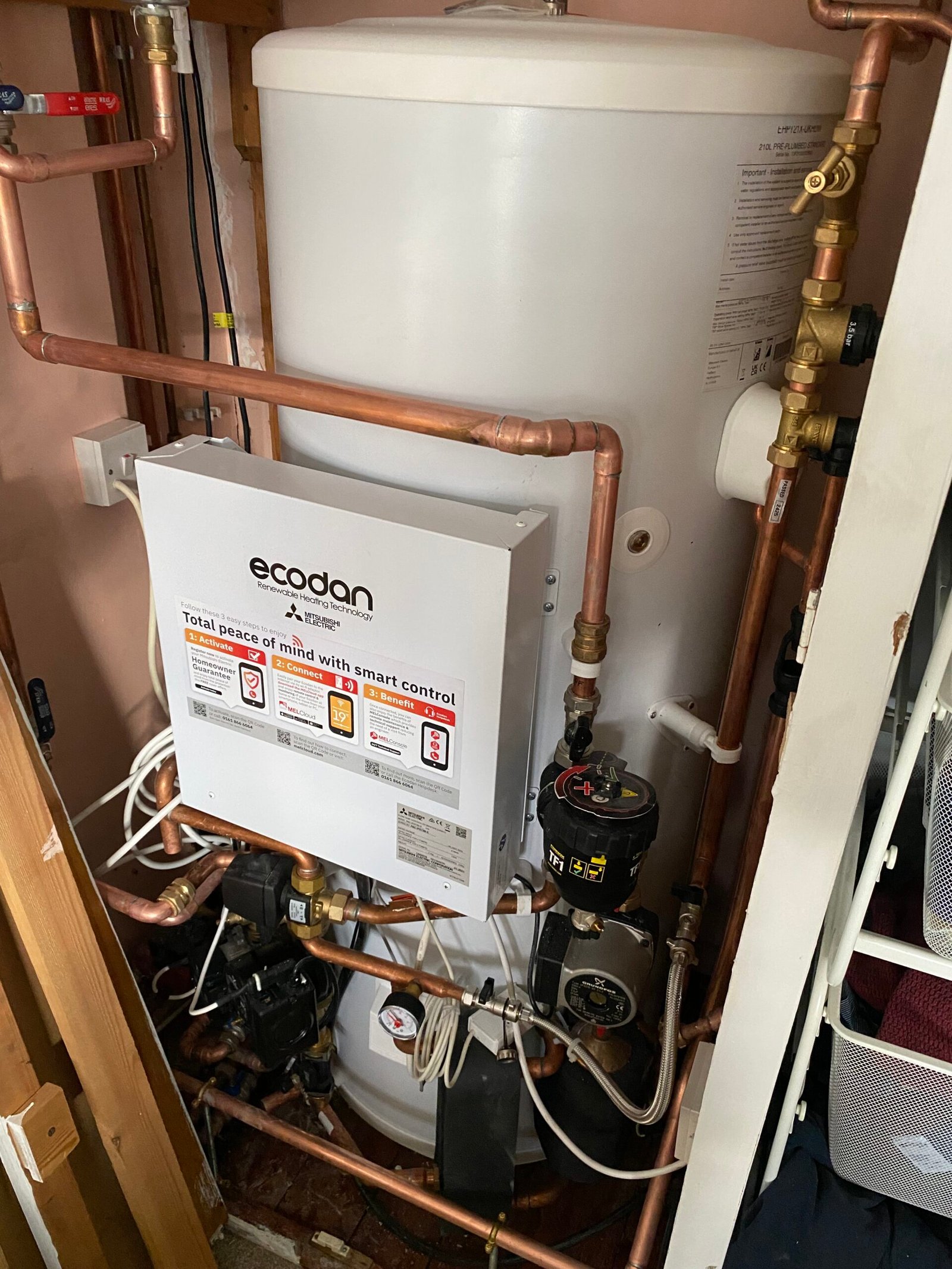
If you’re on a combi, this is the big one. Combis heat water on demand, so most homes running one don’t have a hot water cylinder at all. A heat pump needs one, usually an airing-cupboard-sized tank plus the pipework round it. Losing the airing cupboard to a cylinder is a genuine design decision, not a footnote, and it’s better made with a cup of tea and a proper look at your options than on installation morning.
Outside unit position
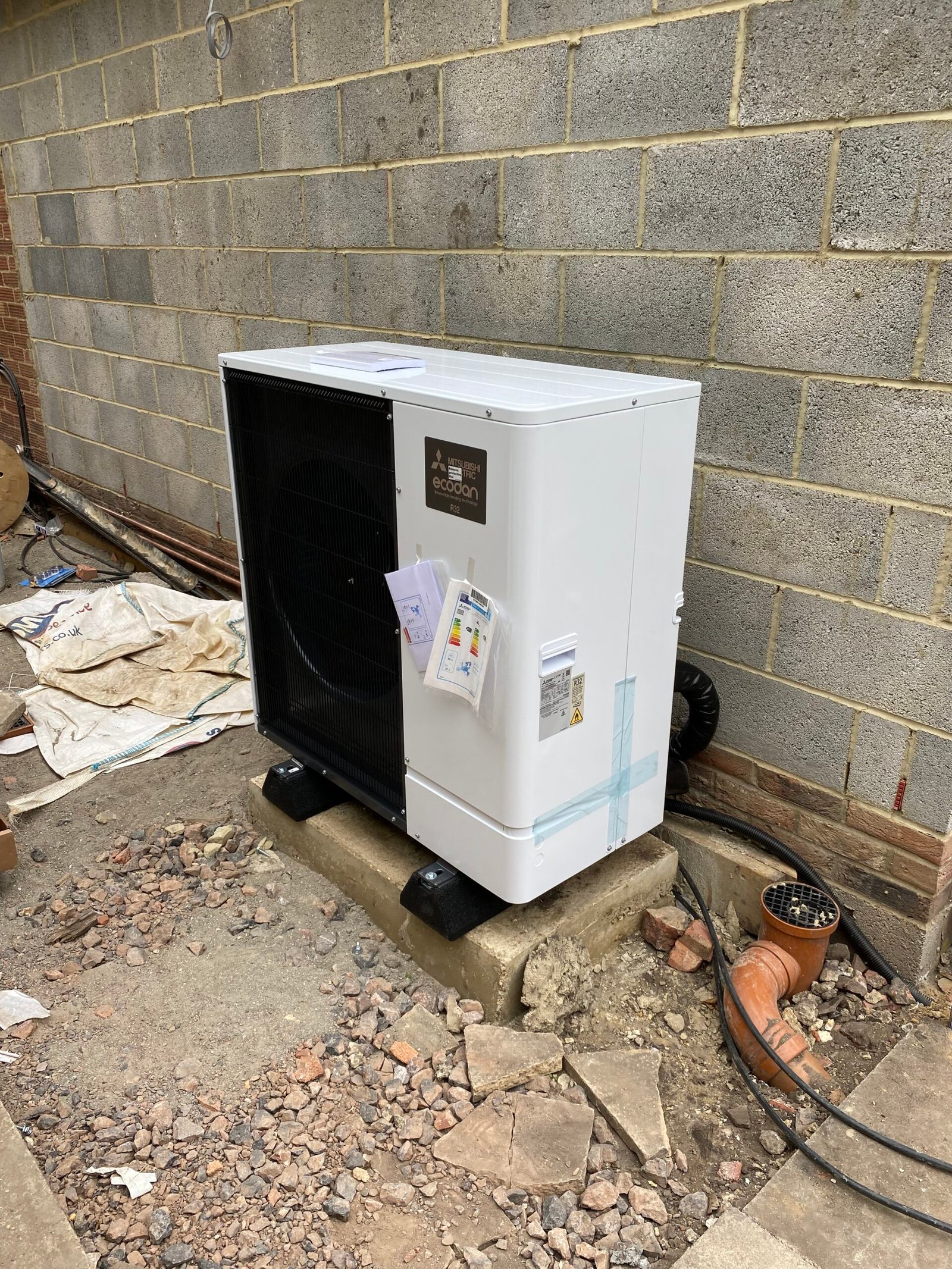
Modern units are quieter than people expect, but they still hum, and they need airflow, frost clearance and access for servicing. There’s also the neighbour question: an unit bolted to the shared wall two metres from next door’s bedroom window is the kind of thing that turns a good job into a dispute. We’d rather find the sensible spot, even if it means a longer pipe run, than have you regretting the placement every summer evening.
Electrical supply and controls
Some homes may need electrical work or a supply upgrade, depending on the existing installation and the heat pump selected. We check this as part of the project planning. We also explain the controls so you know how to run the system comfortably once it’s commissioned.
And there’s a small but important change in expectations: heat pumps tend to suit steady, gentle heating better than switching the system on for a short blast and then turning it off. We talk this through before you decide.
What does installation involve?
A straightforward swap typically takes a few days, though it varies with the house and how much work the radiators and cylinder need. Removing the old boiler, setting the outdoor unit, fitting the cylinder, adapting pipework, wiring the controls, then commissioning. There’ll be drilling noise, people tramping through, and stretches where the heating or hot water’s off while we swap things over. Dust sheets everywhere, same as any job. We’ll talk you through all of it before we start, not after.
Commissioning is where the job is actually won or lost. A heat pump that’s just bolted in and switched on will disappoint you, one that’s properly set up, flow temperatures tuned, controls explained, will quietly do its thing for years. The grant route also requires the install to meet the scheme standards, and we make sure you’re confident running it before we pack up.

Why plan this now, in late October?
Because right now you’re living in the house in cold weather, and you know exactly where it’s cold. Which rooms cool first, where the draughts are, whether the heating ever quite catches the back of the bungalow. That’s gold at survey stage. Ask us in July and we’re guessing from a floor plan; ask us in November and you can just point.
The other clock is the grant: the extra £1,500 for oil and LPG homes runs to March 2027, and installations take planning, survey, design, maybe radiator changes first. A survey now leaves you time to think rather than decide in a rush against a deadline.
And the most common worry, because we hear it every week: will the thing actually work when it’s freezing out? Yes. Modern heat pumps keep running in cold weather, well below freezing, they just work a bit harder. Adrian, one of the case studies in the government’s own announcement, had his down to minus six and the house stayed warm. What actually matters is whether the system’s been sized and designed for your house, which is exactly what the survey is for.
If you’re comparing air source heat pumps Surrey options, focus on the design and installation plan as much as the equipment. Our heat pump installation page explains more about the systems we work with, and you can also read about our plumbing services.
Start with an honest survey
A heat pump isn’t automatically the right answer for every house, and we won’t pretend otherwise. Sometimes the honest advice is sort the insulation first, or stick with a good boiler and spend the difference sensibly. We’d rather tell you that on the doorstep than fit something that disappoints you every winter.
Book a survey through our contact page at a time that works for you. We’ll walk the property together, talk through the grant and what the work would actually involve, and give you our straight opinion on whether a heat pump makes sense for your home.
We cover Aldershot, Farnborough, Farnham, Guildford and surrounding areas.