
Look, everyone’s talking about heat pumps these days, and honestly, it can get a bit confusing. You’re sitting there in your Farnham living room wondering if your old boiler is about to pack it in, and whether you should stick with what you know or make the jump to something eco-friendly. It’s a big decision. At Heat Eco Building Services, we’re seeing more and more of our customers in Guildford and Bordon asking the same question: "Is a heat pump actually worth it, or should I just get a new combi?"
There’s no one-size-fits-all answer, but by 2026, the landscape has changed a lot. With the government’s £7,500 Boiler Upgrade Scheme (BUS) grant and the 0% VAT on installs, the price gap isn't what it used to be. We’ve spent years installing both, so we’ve seen the good, the bad, and the chilly. Here is the lowdown on how these two stack up for a typical Surrey home.
The Straight Talk on Gas Boilers
We’ll start with the old faithful. Most of us grew up with a gas boiler clicking away in the kitchen cupboard. They are reliable, they kick out a lot of heat fast, and we all know how to use them. If you need a quick swap because your current one has finally given up the ghost, a boiler is usually the path of least resistance.
A modern condensing gas boiler is pretty efficient: usually around 90%. That means for every pound you spend, 90p is going into heating your water. But here is the kicker: there are no grants for them anymore. You’re paying the full whack, which is usually between £2,500 and £4,500 depending on the model and how much pipework we need to move around.
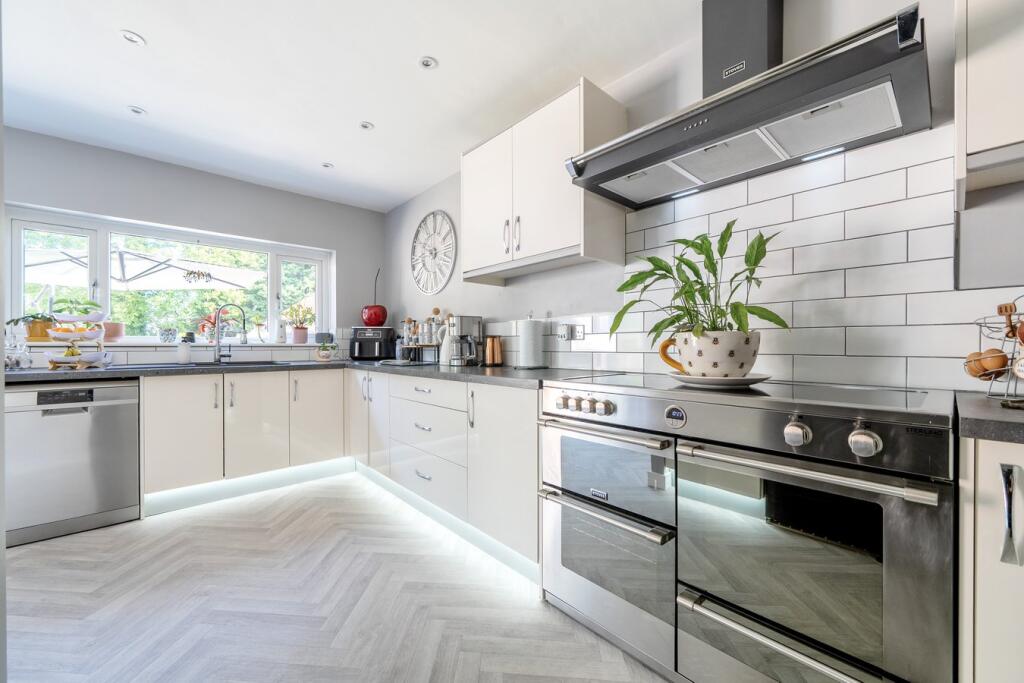
If you're looking to transform your kitchen, a boiler is easy to hide away. But remember, a boiler usually lasts about 12 to 15 years. It’s a shorter-term fix compared to what else is out there. Plus, there’s the carbon footprint. A typical home in Surrey pumps out about 2.5 tonnes of CO2 every year just from heating. Who wants that hanging over there house these days?
Enter the Air Source Heat Pump (ASHP)
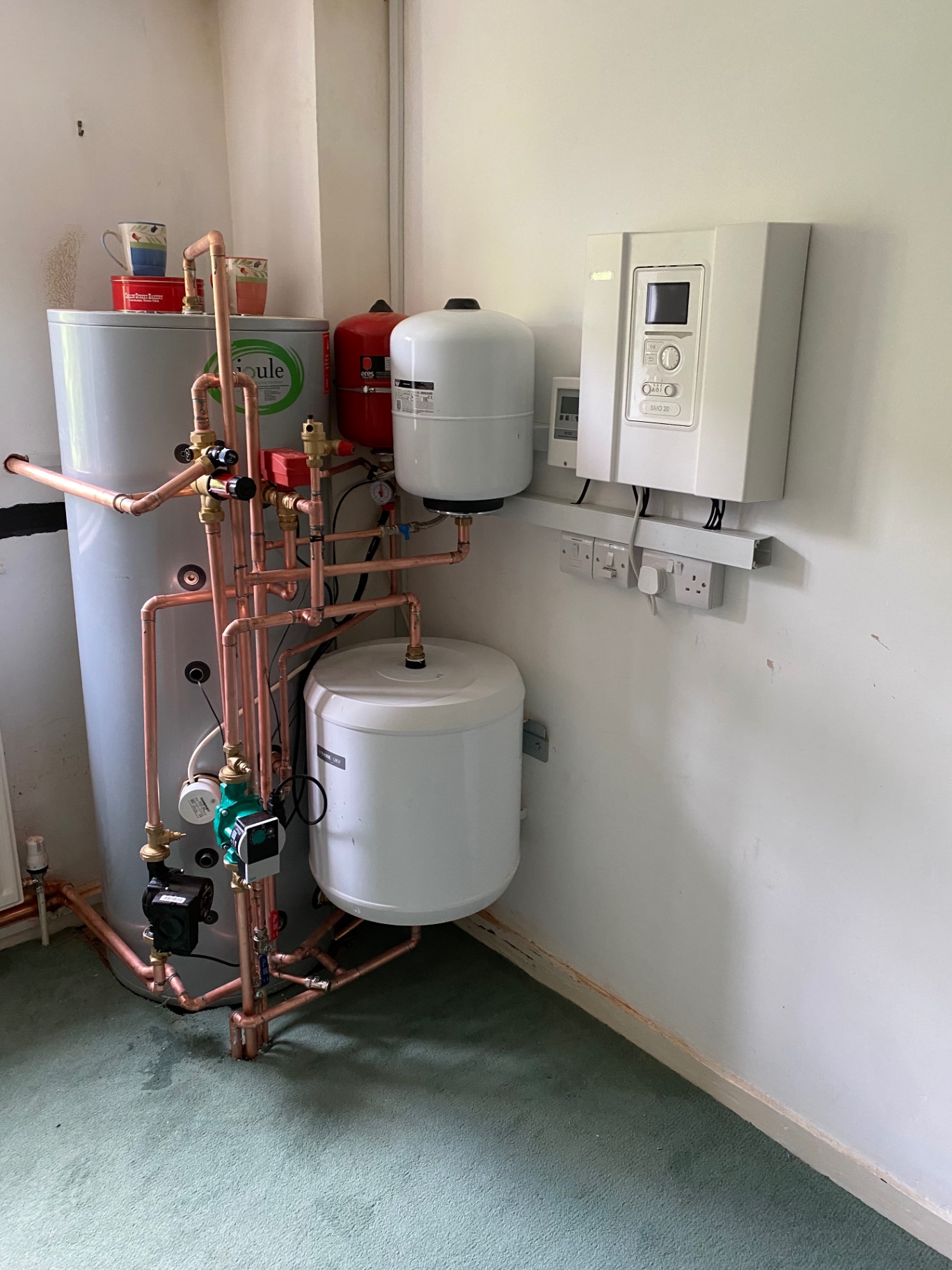
Think of an air source heat pump like a fridge, but in reverse. It takes heat from the outside air: even when it's freezing in Bordon: and pumps it into your home. The tech is incredible. For every 1kW of electricity it uses, it can give you 3kW or 4kW of heat. That’s "300% to 400% efficiency" in technical speak, or "loads of free energy" in plain English.
The best part about 2026? The £7,500 BUS grant makes a massive dent in the cost. A standard install might cost £12,000, but after that grant, you’re looking at about £4,500. Suddenly, it’s not much more than a high-end boiler.
Running Costs: The 2026 Reality
People used to worry that heat pumps were way more expensive to run because electricity costs more than gas. But times have changed. Gas prices have stayed pretty volatile, and electricity is slowly getting cheaper as we get more wind and solar on the grid.
In 2026, the annual running cost for space heating is almost a dead heat. We’re talking about £840 a year for a heat pump versus £835 for gas. It’s basically parity. But if you have PV solar panels (which we’ll talk about later in this series), you can run that heat pump for almost nothing during the day. That’s where the real magic happens.
Is Your Surrey Home Ready?
This is where we have to be honest with you. A heat pump isn't a "drop-in" replacement for a boiler. It works differently. Boilers give you a big blast of high-temperature heat. Heat pumps are more like a steady, low-temperature hum. They keep your house at a constant, lovely temperature all day long.
To make that work, your house needs to be decent at holding onto heat. If you’ve got a drafty old Victorian villa in Guildford with no loft insulation, we’d suggest sorting that out first. Otherwise, the heat pump will be working overtime and your bills will climb.
We often find that customers need slightly larger radiators or, even better, underfloor heating. There is nothing quite like walking across a warm floor on a rainy Tuesday morning. It’s a level of comfort a radiator just can’t match.

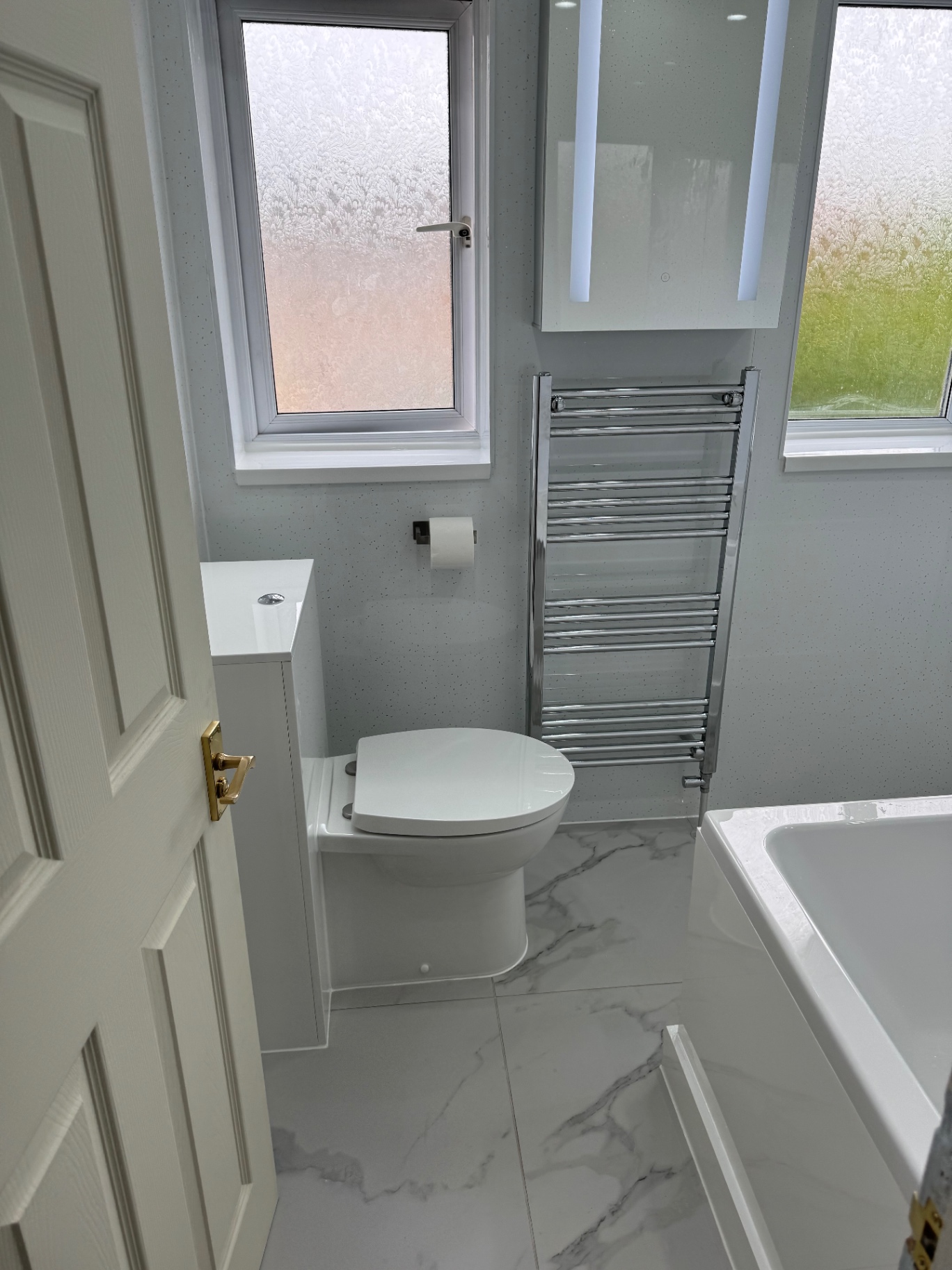
If you're already thinking about a bathroom renovation, that’s the perfect time to think about underfloor heating and how it ties into a new eco-friendly system.
The Verdict: Which One Wins?
So, which is better for your home?
Choose an Air Source Heat Pump if:
- You want to future-proof your home.
- You care about your carbon footprint (it cuts emissions by about 70%).
- You have a bit of space outside for the unit (about the size of a washing machine).
- You plan on staying in your home for 10+ years.
- You want to add value to your property.
Stick with a Gas Boiler if:
- Your upfront budget is super tight and you can't access grants.
- You live in a very "leaky" house that is hard to insulate.
- You need a replacement today because your old one exploded.
Why Work With Us?
At Heat Eco Building Services, we don’t just "fit boxes." We look at your whole house. Whether we are fixing a leak or designing a full eco-heating system, we treat it like it’s our own home. We’re local, we’re friendly, and we won’t baffle you with jargon.
We also handle the paperwork for the £7,500 grant, so you don't have to deal with the headache of government forms. We just want to make sure you have a warm, efficient home that doesn't cost the earth, literally or figuratively.
If you’re in Farnham, Guildford, or anywhere nearby and you’re still on the fence, give us a shout. We can pop round, have a look at your current setup, and give you a straight answer on what makes the most sense for your wallet and your walls. Who wants a nasty cold house in the middle of winter? Not us, and definitely not you.
Stay tuned for day 2 of our series where we’ll be looking at how solar panels and battery storage can make your heat pump even cheaper to run.