
So, you’re thinking about making your home a bit more eco-friendly. Maybe you’ve seen the neighbors in Farnham getting a shiny new air source heat pump, or perhaps you’re tired of those Guildford winters where the draft under the door feels like a personal insult. It’s tempting to jump straight to the high-tech stuff: solar panels, batteries, the whole lot: but there is a secret step most people miss. At Heat Eco Building Services, we call it the "Fabric-First" approach, and honestly, it’s the most important part of the puzzle.
Basically, there is no point in putting a state-of-the-art heater in a house that leaks heat like a sieve. It’s like trying to fill a bucket with water when the bucket has five holes in the bottom. You can buy the fanciest tap in the world, but the water is still going to end up on the floor.
What on Earth is ‘Fabric-First’?
When we talk about the "fabric" of your home, we aren’t talking about your curtains or that lovely throw on your sofa. We mean the actual bones of the building. The walls, the roof, the floors, and the windows. A fabric-first approach means we look at how well your house holds onto heat before we even think about how to generate it.
Most of us living in Surrey have homes that have been around a while. Whether it’s a Victorian terrace in Bordon or a 1930s semi in Godalming, these houses weren’t exactly built with modern efficiency in mind. They were built to breathe, which is a polite way of saying they let a lot of cold air in and a lot of warm air out.
By focusing on insulation and airtightness first, we make the house do the heavy lifting. If the house stays warm on its own, your boiler or heat pump doesn’t have to work nearly as hard.

Why Insulation is the Secret Sauce for Heat Pumps
We get a lot of calls about heat pump installations these days. Everyone wants to move away from gas, which is great for the planet and, eventually, your wallet. But here is the thing: heat pumps work differently than old-school boilers. A boiler is like a burst of intense heat, while a heat pump is more like a steady, gentle hum.
If your insulation is poor, a heat pump might struggle to keep up on a freezing January night. But, if you’ve taken a fabric-first approach and sorted your loft and wall insulation, that heat pump becomes incredibly efficient.
The benefits are pretty stunning:
- Smaller Units: When your home holds heat well, you can actually install a smaller (and cheaper) heat pump.
- Lower Bills: Because the system isn't constantly fighting a draft, it uses way less electricity.
- Consistent Comfort: No more cold spots. Just a nice, even temperature throughout the house.
Who wants a nasty cold draft in there house these days? Nobody. That’s who.
Looking for the Leaks
Before you start sticking foam everywhere, you need to know where the heat is actually going. This is where we get a bit technical, but in a cool way. We use thermal imaging to see exactly where the "thermal bridges" are: those bits of the building where heat escapes faster than a teenager on a Friday night.
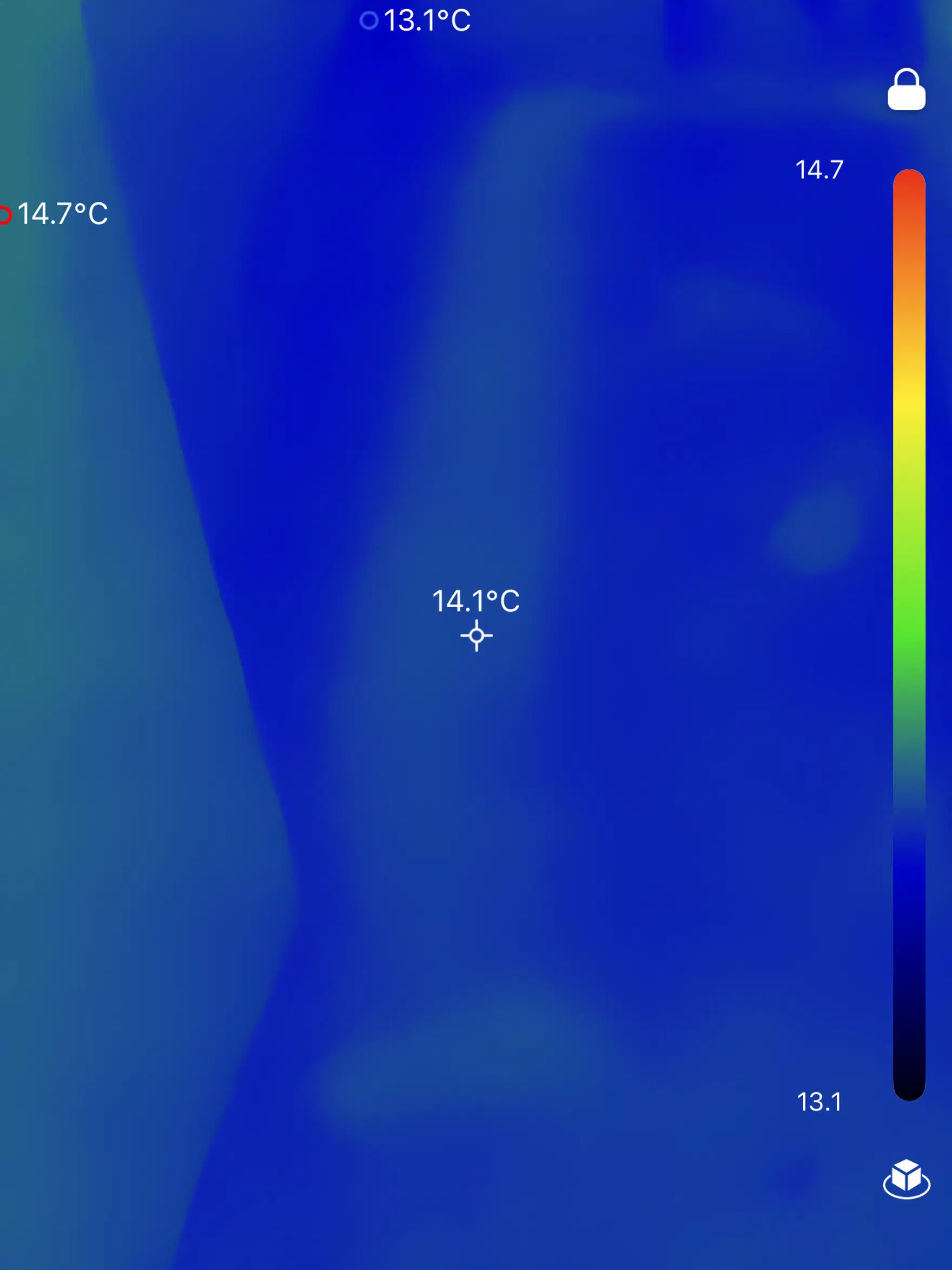
In the image above, you can see how we track temperature variations. If we see a big purple patch on your wall, we know that’s where the insulation has slumped or where a draft is getting in. It’s like having X-ray vision for your house.
A lot of the time, the biggest culprits are the simplest things. Loft insulation is a classic. If yours is less than 270mm thick, or if it’s been squashed down by all the Christmas decorations you’ve stored up there, it isn’t doing its job properly.
Don't Forget the Pipes!
While we’re talking about insulation, let’s talk about plumbing. People often forget that their pipes need a bit of love too. If you’ve got hot water running through cold, uninsulated crawl spaces, you’re losing heat before the water even reaches your tap or radiator.
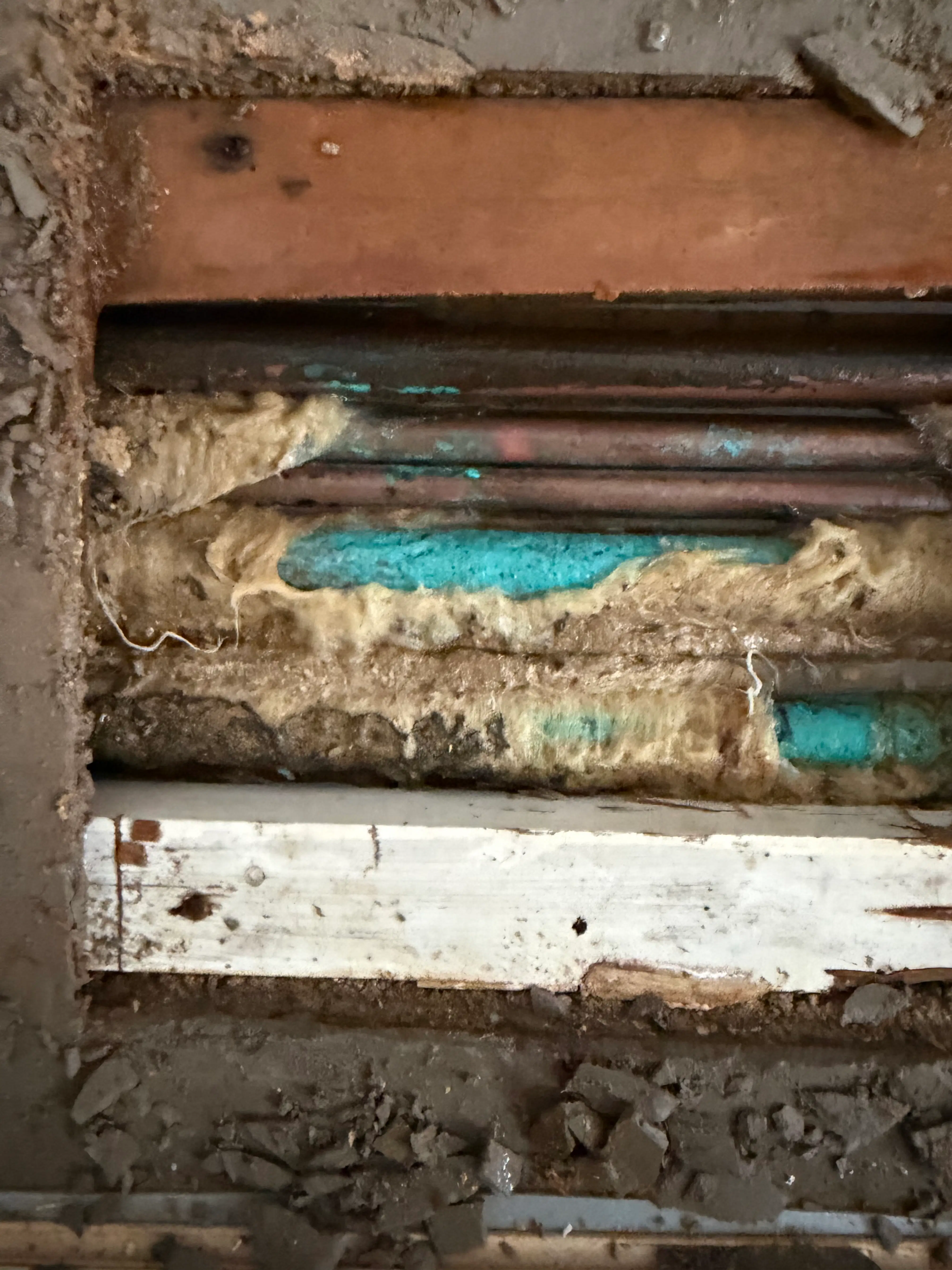
Properly lagging your pipes is one of the quickest, cheapest ways to make your home more efficient. It’s something we check during every commercial building maintenance job and every residential boiler service. It’s a small thing, but it makes a massive difference to the overall "fabric" efficiency.
Fixing the "Hidden" Problems
Sometimes, the fabric-first approach isn't just about adding new stuff; it’s about fixing the old stuff. Damp walls, for example, are terrible for insulation. Wet bricks pull heat out of a room much faster than dry ones.
We often find that older copper pipes have developed tiny pinhole leaks over the years. These leaks might not be big enough to flood your kitchen, but they keep your walls damp and your system inefficient.
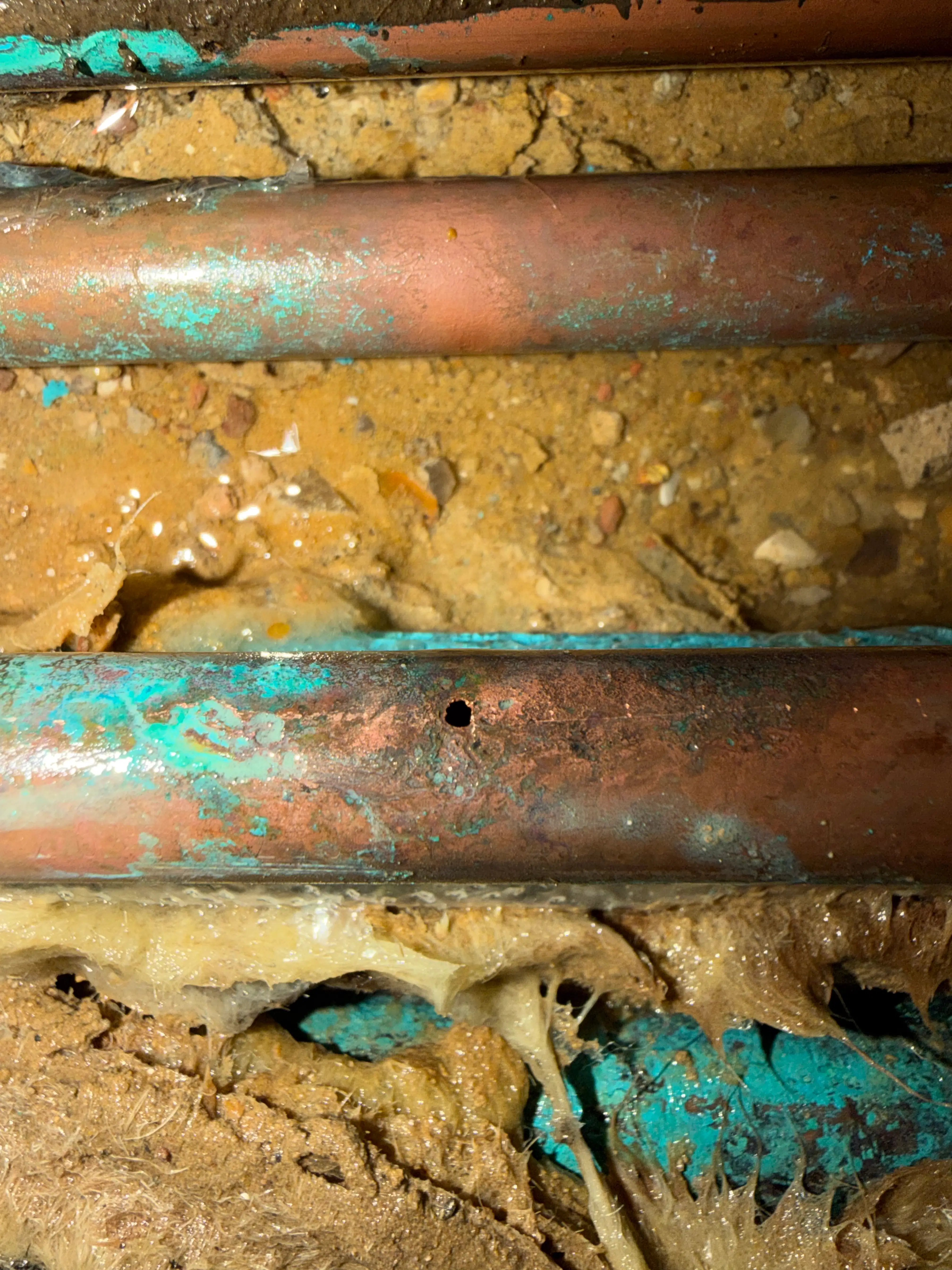
If you see green oxidation like in the photo above, that’s a sign your system is struggling. Part of making your home "sustainable" is ensuring the infrastructure is solid. We can’t build an eco-friendly future on top of leaky, corroded pipes.
The Fabric-First Checklist for Surrey Homeowners
If you’re sitting in your Guildford or Bordon home right now wondering where to start, here is our recommended sequence. It isn't always the most exciting way to spend money, but it is the smartest.
- Draft Proofing: Start with the easy stuff. Brushes on the bottom of doors, sealant around windows. It’s cheap and you’ll feel the difference immediately.
- Loft Insulation: Check the depth. If it’s looking a bit thin, top it up. It’s one of the best ROI (Return on Investment) jobs you can do.
- Wall Insulation: If you have cavity walls, get them filled. If you have solid walls, look into internal or external wall insulation. This is a bigger job, but the results speak for themselves.
- Glazing: If your double glazing has "blown" (you can see condensation between the panes), it’s not insulating anymore. It’s basically just a hole in the wall at that point.
- Heating Optimization: Now that the house is "tight," let’s look at the heating. Whether it’s a new eco-friendly boiler or a heat pump, it’s going to work perfectly because the house is ready for it.
The Bigger Picture
At Heat Eco Building Services, we’re all about the long game. We don't just want to sell you a fancy piece of kit and walk away. We want to help you create a home that is genuinely sustainable, comfortable, and cheap to run for the next 30 years.
Whether we’re doing a bathroom renovation or installing a commercial heating system, we always have that eco-conscious hat on. We think about how the water is heated, where the heat is going, and how we can make the whole thing work together as one efficient unit.

It’s about being proud of the home you live in. Knowing that when the wind howls across the Surrey Hills, you’re tucked up warm and toasty, and your energy meter isn't spinning like a Catherine wheel.
Ready to Start Your Fabric-First Journey?
If you’re unsure where to start, give us a shout. We love talking through these things: it’s what we do. We can come out, take a look at your current setup, and give you some honest, friendly advice on what will make the biggest impact for your specific house. No jargon, just straight-talking building and heating advice.
Whether you’re in Farnham, Guildford, or anywhere else in our lovely corner of the world, we’re here to help you future-proof your home.
The results speak for themselves: less waste, lower bills, and a much happier planet.
Stay warm!