
We’ve been spending a lot of time in Farnham lately and one thing is becoming very clear: people are ready for a change. The old way of heating our homes just isn't cutting it anymore, especially with energy prices doing whatever they want and the planet feeling the heat. This is Day 3 of our 7-day series on future-proofing your Surrey home, and today we are diving deep into the world of Air Source Heat Pumps (ASHPs).
It’s a bit of a buzzword these days, isn't it? But behind the jargon, there is some seriously impressive tech that can change how you feel about your energy bills. Whether you’re over in Bordon or right in the heart of Guildford, understanding how these systems work is the first step to a more comfortable, eco-friendly house. We’ve seen so many homeowners get nervous about making the switch, but honestly, once you see the results, there is no looking back.
What Exactly is an Air Source Heat Pump?
Think of it like a refrigerator but working in total reverse. While your fridge takes heat from the inside and pushes it out to keep your milk cold, an air source heat pump grabs heat from the outside air and moves it into your home. Even when it feels freezing outside to us, there is still thermal energy in the air that these machines can harvest. It’s a bit of magic, really.
These units sit outside your house, looking a bit like an air conditioning unit. They use a fan to pull in the air, pass it over a heat exchanger containing a refrigerant fluid, and then compress that fluid to ramp up the temperature. That heat is then pumped into your radiators or, even better, your underfloor heating.
Why Farnham Residents are Making the Switch
Farnham has some beautiful homes, from the historic spots near the town center to the newer builds spreading out towards the countryside. The common thread? We all want a warm home without it costing the earth.
- Efficiency that beats gas every time: Traditional boilers are usually around 90% efficient. An air source heat pump? It’s often 300% to 400% efficient. That means for every 1kW of electricity you put in, you get 3kW or 4kW of heat out. You just can't argue with that math.
- Carbon footprint? What carbon footprint: Since they don't burn fossil fuels like gas or oil, your home’s carbon emissions drop significantly. If you pair it with PV solar panels, you’re basically running your heating for free when the sun is out.
- Future-proofing: The UK is moving away from gas. It’s happening. Getting ahead of the curve now means you won't be scrambling when the regulations get tighter in a few years.
Air-to-Water vs. Air-to-Air: Which One Do You Need?
We get asked this all the time. In the UK, and especially for the projects we do at Heat Eco Building Services, Air-to-Water is the most popular choice. This system takes the heat from the air and puts it into your "wet" heating system: your radiators and your hot water tank. It’s a direct replacement for your boiler.
Air-to-Air systems are more like traditional air conditioning. They blow warm air into the room through indoor units. They’re great for certain setups, like a home office or a specific extension, but for a whole-house solution in a typical Farnham semi-detached, Air-to-Water is usually the winner.

Is Your Home Ready? The Checklist
You can’t just slap a heat pump onto any house and expect it to work perfectly. There is a bit of prep work involved, and we always tell our clients to look at the "whole house" approach.
Insulation is King
Before we even talk about the unit, we look at your insulation. Heat pumps work best at lower temperatures than gas boilers. If your heat is leaking out of drafty windows or a poorly insulated loft, the pump has to work harder, and your bills won't drop like you want them to. We often suggest looking at your loft insulation or cavity wall insulation first.
Radiators and Underfloor Heating
Because the water coming out of a heat pump is cooler (usually around 35-45°C) compared to a gas boiler (70°C), you need more surface area to get that heat into the room. This is why underfloor heating is the absolute best partner for a heat pump. It turns your whole floor into one giant radiator.
If underfloor heating isn't an option, you might need "oversized" radiators. Don't worry, they aren't eyesores: modern radiators look fantastic and do a brilliant job of keeping things cozy.
The Installation Process: What to Expect
When we come out to a job in Guildford or Bordon, we start with a full heat loss calculation. We don't just guess what size pump you need. We measure every room, every window, and every door to make sure the system is perfectly balanced.
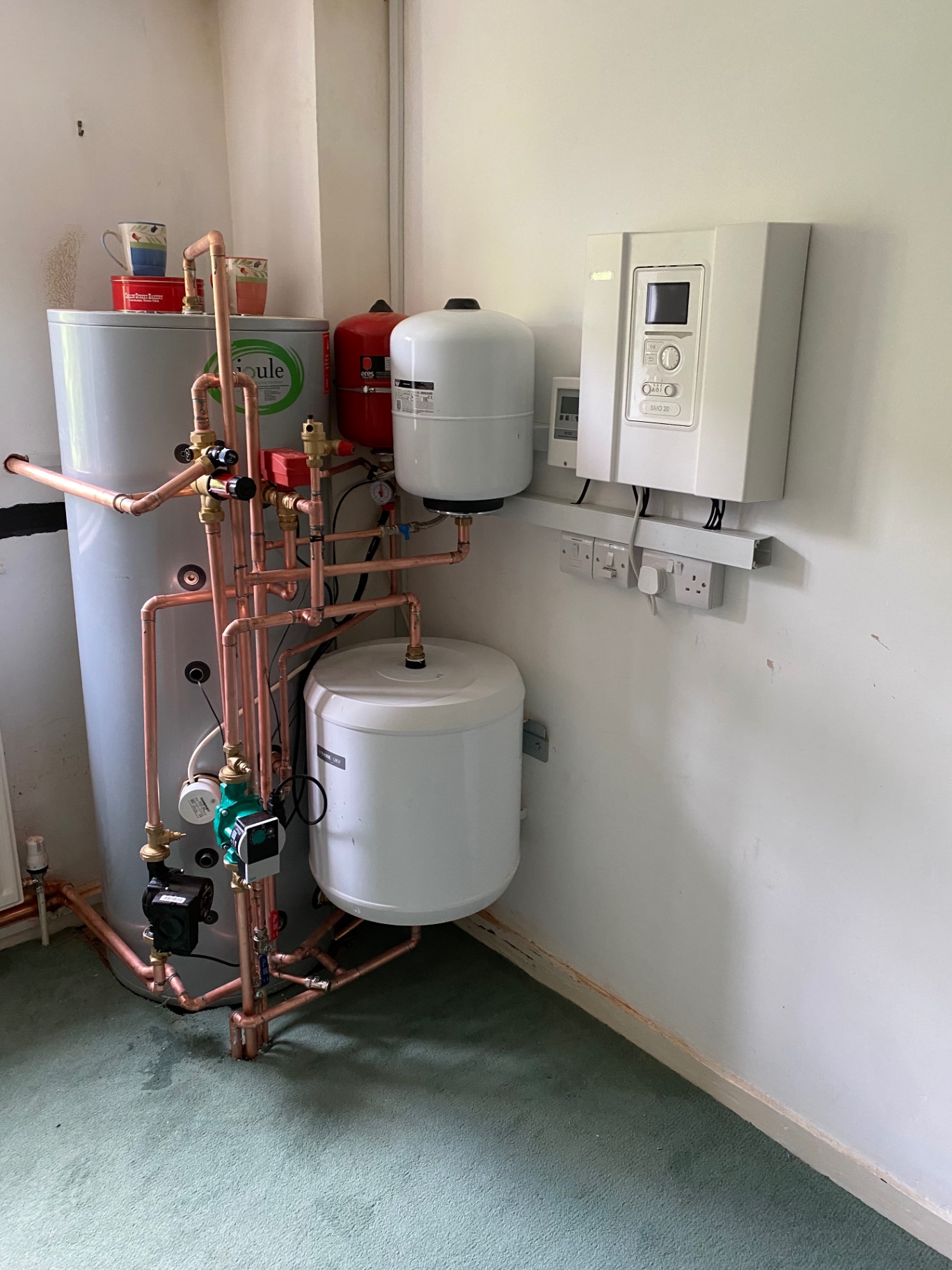
The installation itself usually takes a few days. We’ll set up the outdoor unit on a solid base (usually a concrete pad or brackets on the wall) and then run the pipework into the house. You’ll need a bit of space inside for a new hot water cylinder, as heat pumps require a specific type of tank to handle the lower flow temperatures.
We’ve finished quite a few heat pump installations in Farnham and Guildford recently, and the feedback is always the same: "It’s so much quieter than I thought it would be." Modern units are incredibly silent: you can stand right next to them and barely hear a hum.
Saving Money with Grants
One of the best things about switching right now is the government support. The Boiler Upgrade Scheme (BUS) is a massive help, offering significant grants to help cover the cost of the installation. We help our clients navigate all the paperwork because, let’s be honest, who likes filling out government forms? It makes the transition to green energy a lot more affordable.
Maintenance: Keeping it Running Sweet
Who wants a heating system that breaks down every winter? Not you, and definitely not us. The beauty of ASHPs is that they have very few moving parts compared to a boiler. There’s no combustion happening, so no soot or grime building up.
A quick annual check-up to make sure the air intake is clear of leaves and the refrigerant levels are good is usually all it takes. It’s a "set it and forget it" kind of system. We recommend a quick visual check every now and then: just make sure your garden hasn't overgrown around the unit!
Real Talk: The Results Speak for Themselves
We recently did a project for a family over in Bordon. They were tired of their old, clunky oil boiler and the constant stress of ordering fuel. We installed a sleek new ASHP along with some underfloor heating in their new kitchen extension. The results? Their house is now a steady, comfortable temperature all day long, and they’ve seen a massive drop in their monthly outgoings.
It’s about more than just the money, though. It’s about the comfort. Heat pumps provide a different kind of warmth: it’s consistent. You don't get those "hot and cold" spots you often find with old-school radiators.
Integrating with Other Eco Tech
If you’re really looking to win the energy game, think about how a heat pump works with other systems. Many of our Farnham clients are looking at the full package. You’ve got your heat pump for the warmth, your solar panels for the power, and maybe a battery to store that power for the evening. When it all works together, your home becomes its own little power station. It’s a great feeling knowing you’re not reliant on the big energy companies.
Getting Started with Heat Eco Building Services
We aren't just here to sell you a box. We are here to solve problems. Whether you’re looking for a plumber in Farnham for an emergency or you’re ready to overhaul your entire heating system, we’ve got the team to make it happen.
We pride ourselves on being local, friendly, and honest. If a heat pump isn't right for your home yet (maybe you need to fix that roof first!), we’ll tell you. Our goal is to make sure every home in Surrey is as efficient as it can be.
If you’re curious about making the jump to an air source heat pump, why not get in touch? We can have a chat about your house, look at your current bills, and figure out the best path forward for you. Farnham is leading the way in eco-conscious living, and we’re proud to be the ones helping you get there.
Stay tuned for Day 4 of our series, where we’ll be talking about how battery storage can take your solar setup to the next level. See you then!